By Arihant Paigwar
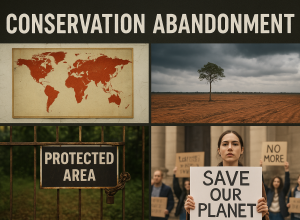
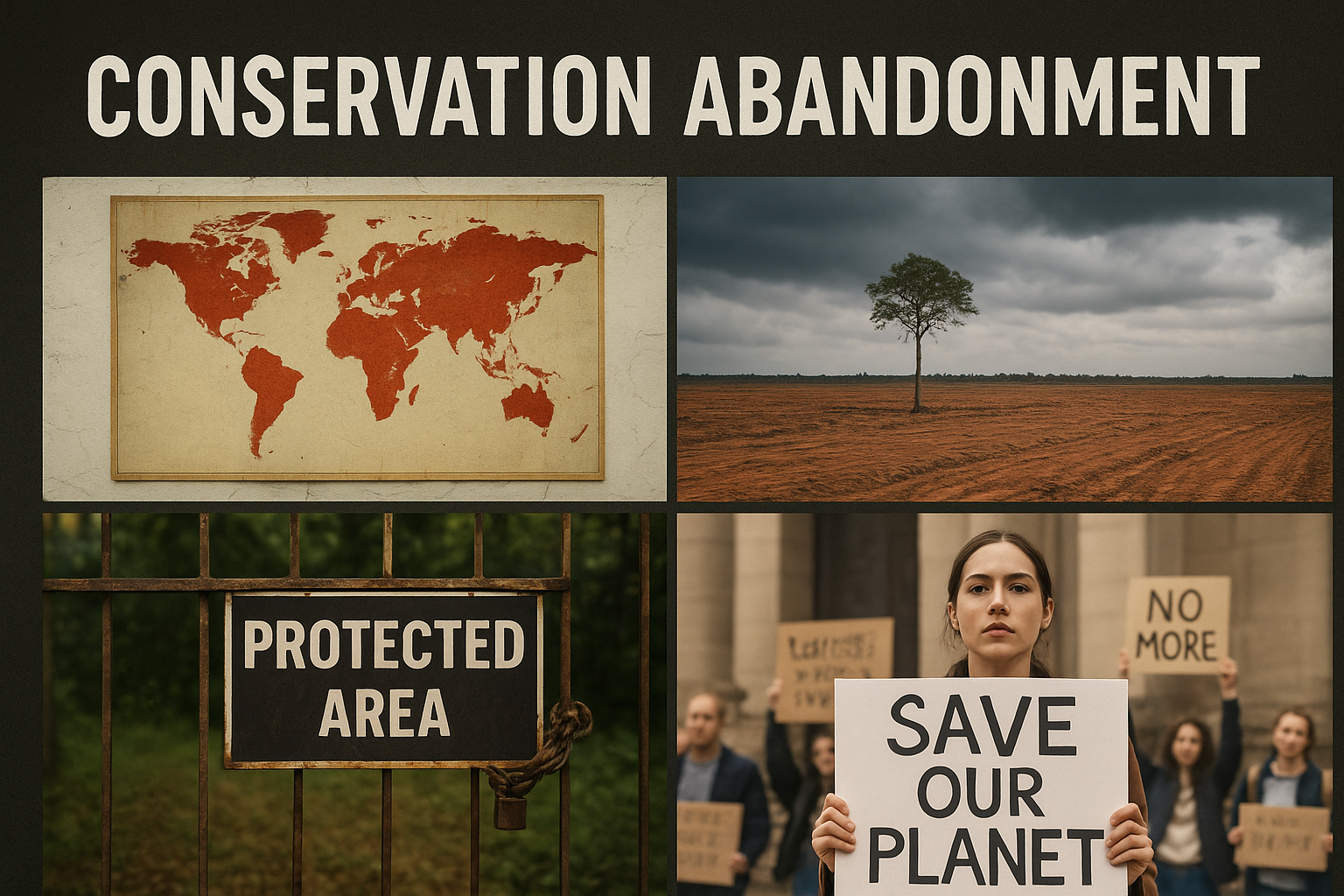
An article in Nature Ecology & Evolution identifies conservation abandonment as a significant and largely overlooked policy area that hinders global conservation efforts. According to the paper “Conservation abandonment is a policy blind spot,” the widespread failure to implement conservation promises puts large international goals, such as the Kunming-Montreal Global Biodiversity Framework‘s aim to protect 30% of the land and oceans by 2030 at risk.
After their paper conceptualises conservation abandonment as a failure combination, the authors first depict the failure of regimes to perform conservation actions even after the signing of the agreements, resulting in “paper parks” that are only a term in documentation and have not been truly protected. Secondly, among the changes in the natural world, there is one called Protected Area Downgrading, Downsizing, or Degazettement (PADDD), which describes the legal court’s decision to cancel or reduce the administration of the area.
In their analysis of 3,749 PADDD cases in 73 countries between 1892 and 2018, they discovered that the protective statuses were lessened or removed over an area equivalent to the size of Greenland. One of the most important discoveries among their different findings was the strong relationship (directly linked to two-thirds) between the rollbacks and the performance of industrial-scale resource exploitation, such as mining, oil drilling, and large infrastructure projects.
The costs might be expected to rise over $540 billion by 2030, while the present global conservation effort is very conservatively estimated to be $87 billion per year and may exceed $200 billion depending on what is included. But Matthew Clark, a postdoctoral researcher at the University of Sydney, thinks that “No one can say how long these programs are going to last, but we certainly don’t have much of a line of sight.”
Studies also reveal that at least one out of every three conservation projects is abandoned within two years following the implementation. Clark adds that “This blind spot may very well signal the progress at COP type of events as real ecological recovery takes decades.” One of the biggest threats that have led to this situation of non-achievement of environmental goals is the lack of accountability and sustained effort.
The abandonment of conservation has been gaining momentum all over the globe. For example, the people of Chile were initially allocated 22% of the Territorial Use Rights in Fisheries, which, however, were later withdrawn. Specialists estimated that a portion of conservation-related community organizations in the southern and eastern regions of Africa which after that abandoned the management of their areas or changed their boundaries and regulations. Even “Other Effective Area-Based Conservation Measures” (OECM), which are recognized by GBF, are going through the change process. Two countries, Canada and Morocco, have together removed seven OECMs that cover over 2,400 square kilometres, and a vast maritime OECM has been authorized for exploratory oil drilling.
According to this report, abandonment dominates most of the regions with land use under heavy pressure and a decline in external funds. Society and culture changes, like secularization leading to less conservation of the holy natural sites, also affect the trend. Moreover, the paper identifies economic and political changes as the greatest risks. After the US government cut $365 million in international conservation assistance, it removed legal protections from ecologically vital areas like the Pacific Islands Heritage Marine National Monument and all 18 of California’s national forests in February 2025, the paper states. Europe right-wing populist parties, e.g., several of them, have been opposing the EU’s Green Deal whereas environmental rollbacks in Brazil under Jair Bolsonaro’s presidency (2019–2023) have led to the global conservation movement’s decline getting faster. The authors argue that if the issue of conservation abandonment is not addressed, it will be a substantial obstacle to the means of reducing biodiversity loss and meeting the global warming 1.5 C target.